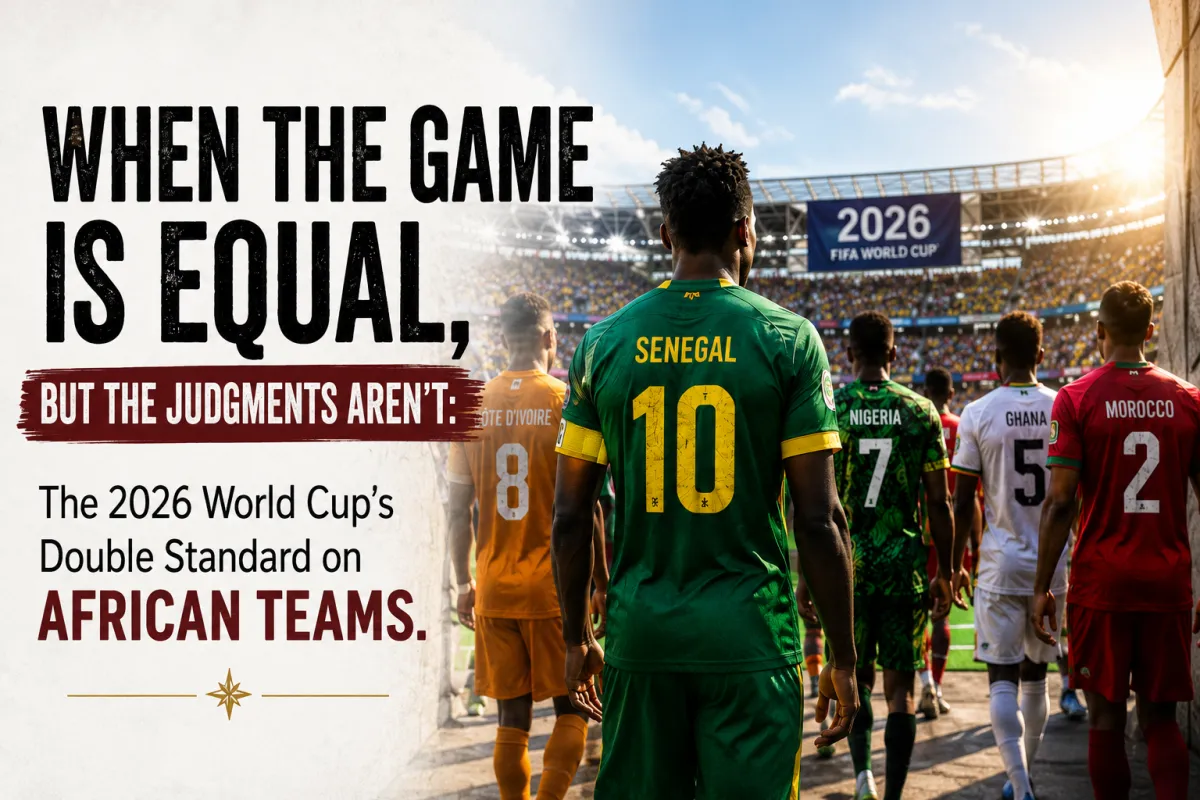
The 2026 Fifa World Cup's double Standard
When African teams take to the FIFA World Cup stage, we hear the familiar chorus. Critics—many claiming indifference—cannot help but scrutinize every move, magnifying every mistake while diminishing every triumph. A misplaced pass becomes evidence of poor football intelligence. A defensive error becomes proof that African teams are tactically naïve. A defeat is rarely just a defeat; it becomes a verdict on an entire continent.
Yet what I find most remarkable is not the criticism itself. It is the response. African players seldom descend into public quarrels with those determined to diminish them. They return to training. They prepare for the next match. They allow their football—not their frustration—to speak. That quiet discipline is more than professionalism; it is emotional intelligence. They understand that greatness is never built by answering every insult.
Belonging does not require permission.
That is where the real power lies. The presence of African teams on football’s biggest stage does more than add diversity to a tournament. It challenges narratives that have existed for generations. For decades, African football has been described as physically gifted but tactically immature; entertaining but undisciplined; capable of producing brilliant individuals but incapable of competing consistently with Europe’s elite. Those stereotypes have survived far longer than the evidence supporting them.
Recent tournaments tell a different story. African football has continued to grow in quality, professionalism and tactical sophistication. Clubs across the continent are developing talent, African coaches are gaining recognition, and African players are no longer exceptions in Europe’s biggest leagues—they are among its biggest stars. Yet despite this progress, the language surrounding African football often feels different.
During this tournament, I found myself asking a question that had little to do with football itself. Why do African teams provoke such relentless commentary?
I watched coaches, pundits and commentators dissect African performances with an intensity that often seemed disproportionate. Every weakness became a defining characteristic. Every mistake became confirmation of a narrative that some appeared eager to preserve. One comment particularly caught my attention. An Italian coach reportedly suggested that allowing too many African clubs into elite competitions would weaken the sport. Whether intended as analysis or opinion, the remark revealed something deeper. It assumed that African participation is a threat to quality rather than a contribution to it.
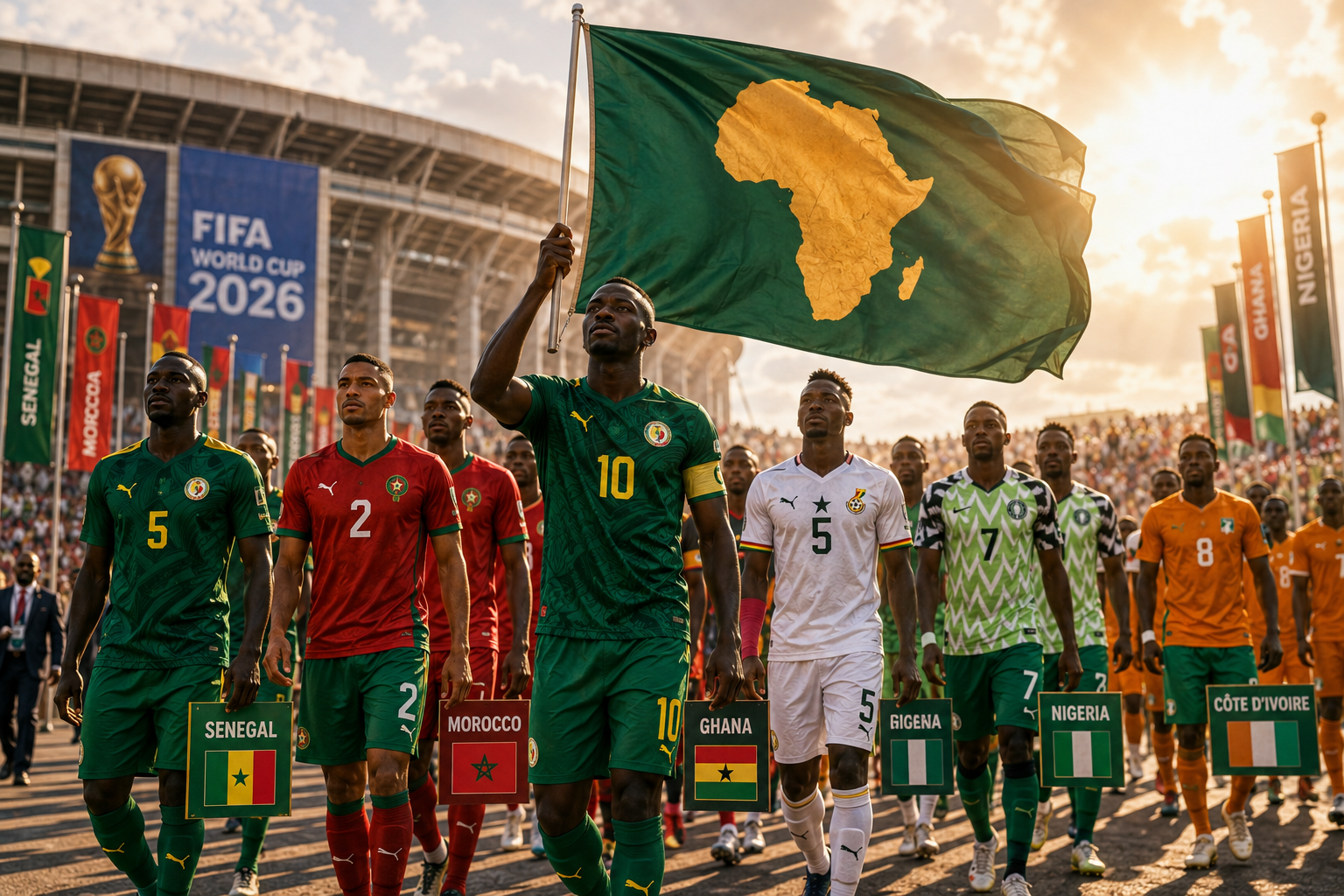
It reflected a mindset that still views Europe as football’s natural centre and Africa as a perpetual outsider trying to earn admission. That assumption deserves to be challenged. Ultimately, this is not an argument for special treatment. African teams should be praised when they play well and criticised when they play poorly. That is the nature of elite sport.
The question is whether the same standard is being applied to everyone.
When a European giant loses, the post-match conversation often revolves around tactics, injuries, fatigue or an off day. When an African team loses, the discussion can quickly become a referendum on African football itself. One team’s mistake is treated as an individual error; another’s becomes a cultural stereotype.
That distinction matters.
Bias is not always loud. It does not always arrive wrapped in insults or racial slurs. Sometimes it appears in the assumptions we make, the language we choose, the grace we extend to some, and the grace we deny to others. The unequal standard is often hidden, not in the criticism itself, but in who is permitted to be human. Perhaps that is the conversation football needs to have. Because the measure of fairness is not whether we criticise. The measure of fairness is whether we judge identical performances by identical standards, regardless of the colour of the shirt, the passport a player carries, or the continent they represent.
As an African proverb wisely reminds us: “Until the lion learns to write, every story will glorify the hunter.”
For generations, African football has been interpreted through the voices of others. Today, the lion is finding its voice. And when the lion tells its own story, the world may finally discover that what it once dismissed as weakness was, in fact, resilience; what it labelled as raw talent was brilliance; and what it feared was never African football itself, but the collapse of old assumptions.
But the lion is beginning to write.
And perhaps that is what some people find most unsettling.
Enjoyed this article?
Join the conversation and stay connected and up to date with articles, and the latest from Pascaline!
Sign-up for my Newsletter: https://www.pascalinetshikalange.co.za/newsletter and stay in the know with the latest blog article, literary news and book promotions.
Explore my Blogs: https://www.pascalinetshikalange.co.za/rethinking-africa
I would love to hear from my readers and subscribers on the topics I address or any questions.
Send me a message: https://www.pascalinetshikalange.co.za/contact
For real-time updates and developments in my Content:
Follow me on the Socials: Tiktok Instagram; Facebook;
Thank you for visiting. I appreciate every reader who takes the time to explore my work, and I hope to see you again soon.
© Pascaline Tshikalange. All rights reserved.
Privacy Policy | Terms & Conditions |